In 1954, the year in which Benjamin Britten completed The Turn of the Screw, he wrote to Eric Walter White that he had just read another short story by Henry James with “much the same quality as the Screw”. That story was Owen Wingrave. Thirteen years later, Britten asked Myfanwy Piper to adapt it for his next opera, a “television opera” commissioned by the BBC. Owen Wingrave was first broadcast in May 1971 and staged at Covent Garden two years later. Since then, there have been a handful of productions – most recently at Snape Maltings in 2014 and by British Youth Opera in 2016 – but what many have labelled Britten’s “pacifist opera” has remained in the operatic margins.
In 2001 Margaret Williams directed a new film of Owen Wingrave for Channel 4 TV, with Gerald Finley in the title role alongside Josephine Barstow as his fearsome aunt, Miss Wingrave, and Martyn Hill as his militaristic grandfather, General Wingrave, with Kent Nagano conducting the Deutsches Symphonie-Orchester Berlin. Now in 2020, the year of “opera on screen and stream”, we have a new production, on YouTube, directed by Stephen Medcalf for Grange Park Opera’s 2020 interim season , filmed on location in Highgate and Surrey over five days in September.
James’s Owen Wingrave is the son of a long line of military heroes. Surrounded by relatives with a fierce loyalty to the traditions of duty, public sacrifice, and death in conflict He is being coached for entry into Sandhurst and a career as a soldier. Owen decides that war is “barbaric” and refuses to continue his army training. His family and other acquaintances gather at the family home, Paramore, with a view to persuading him to change his mind. The old house has a macabre history, including a room in which a former Wingrave mysteriously died – “without a wound” – after striking and killing his young son, who had refused to fight when challenged by another boy. Owen continues to resist their entreaties, taunts and derision. Kate Julian, an opinionated young woman who expects to marry Owen, accuses him of cowardice; whereupon he offers to spend the night in the ill-fated room. She locks him in, and the next morning he is found dead on the same spot as his ancestor.
The conventional view has been that the opera is an expression of Britten’s long-held pacifist convictions and an attack on dynastic military traditions. In preparing the libretto, Britten and Piper studied their Marbot and Clausewitz (On War) and this and other reading furnished Piper with many a military metaphor. Indeed, against the backdrop of Vietnam the opera was viewed by one critic as “blatant propaganda”. In Max Webster’s British Youth Opera production, the opening parade of the ancestral portraits which hang in Paramore’s gallery was replaced by Brechtian placards carried by rifle-wielding youngsters (played by Southend Boys’ Choir) which brandished bills numbering the human losses incurred in the Boer War and in Vietnam, against a back-drop of a rollcall of the dead.
But the story of a pacifist resistance against a clique of grotesques rests uncomfortably alongside the private fight against disquieting revenants of whom Owen sings, “the bully and the boy … I cannot forget them … stalking their way to the room which saw their deaths … Walking, walking – these two: the old man and the boy, for ever in each other’s company”. There are essentially two stories that are not satisfactorily reconciled, and the ending struggles to serve them both.
So, behind this ostensibly straightforward tale of youthful rebellion and idealism lies a network of half-illuminated ideas and unanswered questions. What is the relationship between Owen and the former Wingrave youth, who refused to fight a childhood friend and was beaten to death by his furious father? What has happened in the locked room? And, why has Owen died? If James’ short story and Britten’s opera are not about pacifism what are they about? If one rejects pacifism as the focus of James’s tale, one might surmise that the tale is primarily a ghost story in the tradition of Poe and Hawthorne; indeed, it was published in Leon Edel's selected anthology, The Ghostly Tales of Henry James (1948). Set in the provocatively named Paramore, a country house which is a psychic repository of supernatural presences, Owen Wingrave is in many ways an operatic companion piece to The Turn of the Screw, matching its psychological intensity.
Which story should a director tell? Stephen Medcalf opts for a combination of pacifism and psychological unravelling, and largely dispenses with the paranormal: “I've given full rein to the satirical, often blackly comic aspects of the opera. Alongside that there are three serious themes: the pressure from society to conform; the courage it takes to stand up for who we really are; the destructive love of family.” He updates the action to a modern setting but visually evokes an ancestral past by filming in monochrome, the only splash of colour the blood-red wine in the glasses on the Wingraves’ dining table at Paramore (interestingly, Piper had written to Britten, “Kate’s red dress good for colour T.V. I think”.)
In 2001, Williams had similarly moved the action from its Edwardian setting to the 1950s, establishing a connection with World War II. Medcalf’s shift is more uncomfortable. The opening scenes feel anachronistic. We see Owen and his fellow Sandhurst aspirant, Lechmere, receiving military instruction from Spencer Coyle, in Coyle’s late-20th-century London home. Lechmere peers fervently at his Mac laptop on which is displayed a field map of Napoleon’s war strategies. Miss Wingrave’s militarism is suggested by her rabid obsession with violent video games (presumably this is the “black comedy” of which Medcalf speaks), while a fairly young Sir Philip Wingrave, dressed not in military uniform or formal dinner attire but in a civilian suit, doesn’t really conjure the terrifying spirit of patriarchal tyranny. The action feels a long way from the 1914-18 conflict which the visual imagery evokes.
The reduction of Britten’s orchestra to a duo of piano and percussion was inevitable, given Covid restrictions, but it does deprive the score of its suggestive power. Gone are the sweeping harp flourishes that might come from Quint’s magic casements and which convey Owen’s rebellion; the horn melody that identifies him and communicates his riposte to his bullying grandfather during their off-stage interview; the low tuba which announces his disinheritance (reminiscent of Grimes’ defeat by the Borough); the woodwind chords and gamelan-like shimmer which evoke the ascendancy of love during Owen’s Act 2 “peace aria”.
The pounding, percussive chords of the Prologue, which accompany the parade of portraits and signify the rigid militarism and repressive psychological grip of the Wingrave family upon its young heirs, still make their mark though – even if the sepia portraits that we see at the start turn out not to be imposing family portraits staring fiercely down from the walls of an ancestral gallery but just a huddle of photographs on a hallway table.
One element of the original 1971 film that was criticised was the producers’ over-literalism in the ghost scenes, even though Piper had urged: “The [televisual] technique should be used, not to create ghostly appearances, making figures walk out of frames etc but simply to draw attention to the hallucinatory powers of a heightened imagination.” In Medcalf’s production, Owen seems more haunted from within than without (there’s a nice touch when, in Hyde Park, a troupe of mounted officers ride by, we see them only as reflected in Owen’s eyes). This Paramore is no Bly; just a large smart house in the Surrey stockbroker belt. When Owen approaches his family home, he looks up at a window framing the formidable female trio who will harass and harangue him for his dishonour and cowardice (and decides to enter by the back door), but there is little sense of the past.
During Owen’s interview with his grandfather, which takes place “off-stage”, the Wingraves gather agitatedly outside the door; the domestic mundaneness of the décor deprives the scene of its tense melodrama – I half expected Miss Wingrave to put a glass to the wall to better hear and relish the young man’s lambasting and humiliation. The locked room itself is a concealed servant’s door at the end of a corridor on the top floor. It seems too nondescript to house the Wingraves’ guilty secrets or to evoke the repressed emotional currents that James tells us haunt Paramore. The legend-ballad, sung by the Narrator (and here complemented by just a single treble rather than Britten’s Chorus), which frames Act 2 seems blanched of its power to connect past and present, to establish a historical perspective by which the violent destruction of innocence is seen as part of a recurring pattern at Paramore. Disappointingly, Medcalf makes no use of the cinematic devices – montage, intercutting – which might have reinforced such tragic connections.
If the Wingraves are an unlikable clan of near caricatures, then Medcalf has assembled a terrific cast to embody them – many of whom in fact sang in the 2014 Aldeburgh production, though not necessarily in the same role. Ross Ramgobin’s lyrical baritone conveys Owen’s artistic sensibility – “Courage in war is false. Courage in peace, the kind that poets know wins everything.” – but he does not neglect the fierceness of Owen’s convictions and the strength of his determination. Both elegant and intense, the sweetness of the “peace aria” suspends time much like Billy Budd’s “far-shining sail” but there is also a surprisingly vehement anger and almost Grimes-like defiance at times, in his self-defences and as he implores the family portraits, and we are reminded that Owen is, after all, a “soldier”.
At Snape, James Way appeared as Sir Phillip’s nurse and as the ballad-singing Narrator; here his ardent tenor is just right for Lechmere’s impetuosity and over-enthusiasm, and he captures, too, both the immaturity and remorse that Lechmere displays in Act 2 – gulping down his wine during the fraught dinner party, flirting naively with Kate, and then, fearful of his friend’s fate, anxiously seeking the guidance and support of his mentor, Coyle.
Susan Bullock reprises her fearsome Miss Wingrave, shaping the phrase and enunciating the text with clarity and control, even as her fictional ego descends into histrionic ranting. Richard Berkeley-Steele partners her as he did in 2014, singing with elegance as Sir Philip Wingrave, though he never quite commands and terrifies. Mrs Julian and Kate are a thoroughly nasty pair: Madeleine Pierard captures the former’s hyper-nervous restlessness while Kitty Whately is fittingly unsympathetic as Kate. Her mezzo-soprano is powerful and domineering, but always expressive, and her final duet with Owen creates terrific dramatic tension as he asks her to leave Paramore and share a new life with him. Kate fails Owen and, at the close, the tear-smudged black kohl that shadows her eyes doesn’t touch one’s heart.
Only Spencer Coyle and his wife seem possessing of genuine human feeling. William Dazeley blends authority with balanced judgment, and evinces a genuine affection for young Owen and respect for his ideals. Janis Kelly (who sang Mrs Julian in 2014) is superb as his empathetic wife, a welcome source of wisdom, calm and kindness.
At the close of Owen Wingrave there is just a locked room and an unanswered question: what happens behind the locked door? Some have suggested that the secret chamber houses not only the ghosts of a repressive military tradition but also the spirit of repressed love. Why does Owen die? Is it a choice between conformity and “living”death” and defiance and “literal death”. For some, such as George Bernard Shaw, Owen’s death is a “dispiriting fatalism” but for others it is a private and public validation of self.
One might argue that Owen violates family tradition and as a consequence is either punished or dies to atone. Or, that Owen is a brave soldier and, despite his family’s disdain, dies like a brave soldier. As the esteemed Jamesian scholar Leon Edel stated: “Owen wins his grave”. Both Shaw and Virginia Woolf challenged James about the ending of the play, The Saloon, which was based on his short story, the latter complaining that, “The catastrophe has not the right relations to what has gone before.” James responded to Shaw’s criticism: “There was only one question to me, that is, that of my hero’s … getting the best of everything, simply: which his death makes him do by, in the first place, purging the house of the beastly legend, and in the second place by creating for us, spectators and admirers, such an intensity of impression and emotion about him as must promote his romantic glory and edifying example for ever.” Although he stubbornly rebels against the militaristic traditions of his family, he shows courage and valour in accepting Kate Julian's challenge to sleep in the haunted room, fully aware of the legend and his danger. His moral victory is achieved only through death: the “beastly legend” is now eradicated and the ghost exorcised. Owen “wins with his life”. If he had lived, James retorts, then he would have been a failure.
But, for opera directors the question is not just why Owen die, but how he dies. Medcalf’s solution is in keeping with his decision to excise the supernatural element of the tale. Spoiler alert: this Owen is found lying face-down on the patio beneath the window of the locked room, a victim of his own psychological schisms rather than paranormal haunting. But, it’s still not clear what pushes Owen to suicide. Is it Kate’s rejection? Or, shame? After all, he’s been taunted by Sir Philip, “Insulting the family name, dragging our name in the dirt – disgusting!” But, when challenged by Kate to sleep in the haunted room, Owen declares, “I thought I’d done with that, with the Wingraves and the house. Would you drag me back? The anger of the world is locked up there, the horrible power that makes men fight: now I must take it on.” This suggests that his self-sacrifice is an act of heroism.
In contrast, Medcalf’s conclusion seems to deny James’ argument that his hero gets “the best of everything”. though it is in keeping with the spirit of the domestic tragedy that Medcalf creates. It’s not really a solution to the opera’s conundrums, though. A master of indirection and obliqueness, James’s only directorial instruction for The Saloon was that at the closing climax the stage should be plunged into darkness. Perhaps ambiguity may speak more powerfully than artistic closure?
Owen Wingrave – Ross Ramgobin, Miss Wingrave – Susan Bullock, Sir Philip Wingrave – Richard Berkeley-Steele, Mr Coyle – William Dazeley, Mrs Coyle – Janis Kelly, Lechmere – James Way, Mrs Julian – Madeleine Pierard, Kate Julian – Kitty Whately, Narrator – Richard Berkeley-Steele, Boy Bugler – Chloe Morgan; Director – Stephen Medcalf, Conductor – James Henshaw, Video Production – Fintan O’Connor, Sound – Tom Marshall, Piano – Chris Hopkins, Percussion – Craig Apps.
Grange Park Opera, 2020 Interim Season, streamed on YouTube.
Claire Seymour is the author of The Operas of Benjamin Britten: Expression and Evasion
____________________________________________________
Postscript by Roger Thomas: Anne Ozorio on Owen Wingrave and War
The late founder of Classical Iconoclast, Anne Ozorio, wrote some interesting pieces on Owen Wingrave that complement Claire Seymour'sr review. See:
https://classical-iconoclast.blogspot.com/2013/02/britten-owen-wingrave-imbarilo-broadcast.html
https://classical-iconoclast.blogspot.com/2014/06/britten-owen-wingrave-aldeburgh-music.html
https://classical-iconoclast.blogspot.com/2014/06/at-home-with-benjamin-britten-and-owen.html
https://classical-iconoclast.blogspot.com/2014/06/made-for-tv-britten-owen-wingrave.html
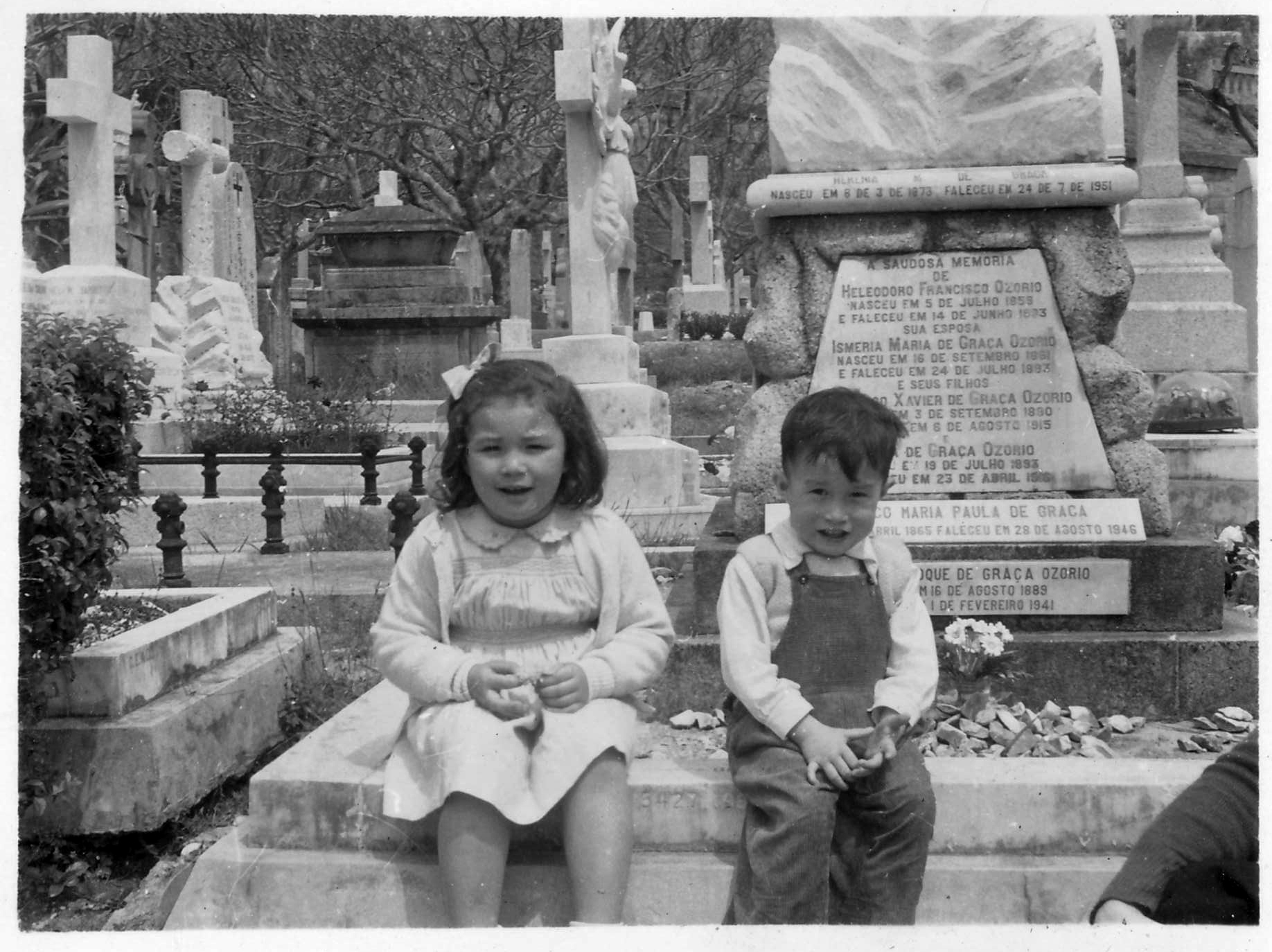
Anne Ozorio was vociferously averse to romantic notions of the military and of warfare. She was born in 1951 into families that had grim memories of the Batte of Hong Kong (the Japanese 1941 invasion of the British colony, the brave but ultimately fruitless defence, followed by harsh, often murderous Japanese occupation until 1945). The Japanese assault began on 8 December 1941 and Hong Kong forces surrendered on Christmas day. Anne's forebears lost two family members in the Battle – an uncle of Anne, Gunner Manuel Heleodoro Ozorio (in an action that amounted to and was tried as a Japanese War Crime) and a great uncle, Private William Markham. Others in the family, including Hong Kong resident Macanese, English, Anglo-Chinese, Norwegian, and a Shanghai-born Iranian national,were held as prisoners of war or civilian internees, or took refuge in neutral Macau.
Anne recalled how the older members of her family found themselves unable to celebrate Christmas even decades after 1945 Rather, they sank into a gloomy, dpressive mood. Anne, who as a historian unearthed important documents in the archives on the Battle of Hong Kong and taped interviewa with veterans, to an extent took the family mood into her adult life (“I hate Christmas”, she sometimes said), though she wrote scintillating pieces on Christmas music on this blog. Nor could she bring hersrlf to hate the Japanese. On the contrary, almost every 6 August she blogged sensitively about the bombing of Hiroshima/Nagasaki and about the music that sprang from these Japanese tragedies.
For the adult members of her family in the post-war years, things brightrned up from Christmas gloom only with the New Year, when the ladies of the Hong Kong Macanese community liberated their mink coats from cold storage and partied the night away.